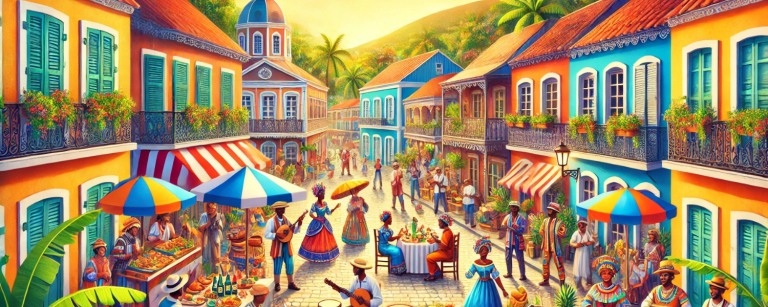
Ensure Accuracy When You Translate English to Haitian Creole

Haitian Creole is a unique and dynamic language with its own grammar, structure, and writing system. The language has made significant progress in standardization, but many Haitians have been educated primarily in French, making it not uncommon for even well-educated individuals who speak Haitian Creole fluently to struggle with writing.

Because of this, relying on an expert in Haitian grammar and the writing system is essential to ensure clarity and accuracy in translations.
Does Haitian Creole Have Grammar?

If Haitian Creole didn’t have grammar, how could millions of people use it fluently every day? How could books, academic theses, and even government documents be written in it? The idea that Haitian Creole lacks grammar is a persistent myth. Like all languages, Haitian Creole follows a structured set of rules, governing sentence formation, verb usage, and communication.

The Power of Translation in Connecting Cultures and Breaking Barriers

How translating Haitian Creole proverbs can build appreciation for Haitian culture. – Have you ever thought about how much of a culture is wrapped up in its language? 

Words are more than just ways to communicate, they’re carriers of history, and the unique ways a community sees the world. And when it comes to connecting cultures, translating English to Creole  isn’t just about switching words from one language to another; it’s about building bridges between people and sharing what makes each culture special.

Why Great Interpretation is the Secret to Powerful Communication?

A manufacturing company recently hired a group of Haitian Creole-speaking employees. Without proper language support, misunderstandings quickly emerged—one of which led to a serious workplace accident. An employee, unaware of critical safety procedures, attempted to work on a machine that was still powered. The company soon realized that language barriers weren’t just an inconvenience; they were a serious safety risk.

What Is French Creole?

Did you know that “French Creole” isn’t actually a single language?

In fact, rather than saying “French Creole,” people should refer to them as “French-based Creole languages.”

These languages form a diverse family, each with distinct grammar, vocabulary, and cultural influences. At Creole Solutions, we often receive requests for “French Creole” translations, but specifying the correct Creole is essential. It’s like ordering “soup”—without details, you might not get what you need!

Key Differences Between Translation & Interpretating

With more Haitian migrants arriving in the United States, the need for language services has never been greater. As a result, we’ve seen a surge in requests, especially for interpreting services. However, many people mistakenly assume that interpreters and translators do the same job, when in fact, these are two distinct professions requiring different skill sets.

Both play a vital role in breaking language barriers, but choosing the right service depends on the context. Let’s explore their key differences and when to use each.

Celebrating Milestones in Haitian Creole Advocacy and Community Impact

Atik sa a disponib an kreyòl ayisyen.  Klike la oswa chwazi “Français” sou tèt paj la pou w ka li l.

As the year ends, we reflect on our journey and our mission to bring Haitian Creole to the global stage. Whether through translation, localization, or cultural advocacy, we’ve worked tirelessly to showcase the beauty and significance of our language. This article offers a glimpse into my day, from managing high-stakes projects to overcoming unexpected challenges—all driven by a deep commitment to advancing Haitian Creole and empowering communities.

The Impact of Haitian Creole Interpretation in Immigration Law

As an immigration attorney, you’ve likely had to guide clients through the most difficult moments of their lives, including removal proceedings. Now, imagine a client like Gerald — a Haitian asylum seeker who has been arrested and is in the process of removal. He’s on the other end of the phone, emotionally distressed, unsure how to explain the traumatic experiences that brought him to the U.S. His future hangs in the balance, but the language barrier makes it even harder to get the information needed to build his case.

The Emotional Impact of Words: Why Finding the Right Words Matters

 
Imagine the emotions you would feel if someone made an unfounded, deeply insulting claim about you, your family, or your neighbors. Then picture how the anger and sadness about this claim would be compounded by stress and fear if the same statement was made on national television and repeated thoughtlessly by others. The experience of our neighbors in Ohio has put a spotlight on the urgent need for mental health resources and the necessity to acknowledge emotional pain.

Translating Pride in Haitian Creole

Socio-cultural norms and values play an important role when written or spoken communication is transferred to a different language. Topics that are not necessarily rooted in the cultural experience of Haitian Creole speakers are especially difficult to handle. At the same time, bridging the language gap between English and Haitian Creole can be the key to a more rational discourse about diversity. This month’s pride celebrations in the U.S. and other countries are a good example.